
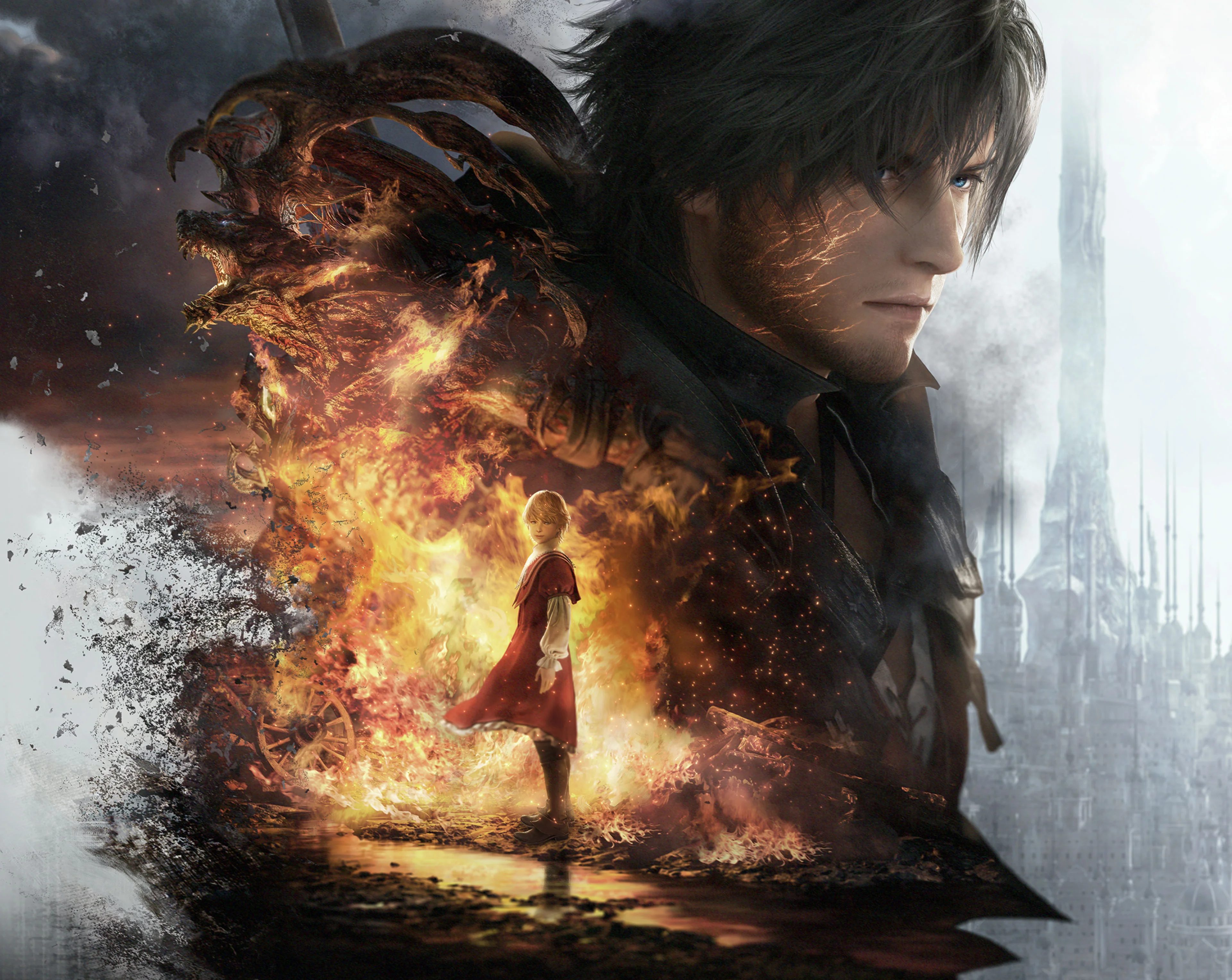
I’ve spent a lot of time playing Final Fantasy games, my history going back to FF3 (FF6 in Japan) on the SNES. I helped defend Mt. Condor in 7 (even though my save kept corrupting around that area) leading me to not finish 7 until years later. While Final Fantasy 16 has some issues with predictability and lack of strategy, I was impressed by the fluid combat and the creative take on summons. The combat, with the help of Platinum Games, feels fast and enjoyable. You really feel like a badass monster slayer and world savior, with fluid animations and seamless combos lending to that feeling.
The game is BEAUTIFUL, even though most of the world is in a dying state, ravaged as it is by an ever-expanding blight. There are green, luscious forests, high mountain peaks, gorgeous green fields, and of course the ever present somehow barren yet teeming with life deserts. Even the blight touched areas are gorgeous in their desolation. It was definitely an early look at what the PS5 was capable of.
You are tasked as Clive Rosfield to save the world and buck destiny, creating your own path and leading the world to do the same. Final Fantasy as a series has had a long and storied history of crystals and magic ruling its world, and saving said crystals to save the world and maintain the status quo. This time around it is those very crystals, and the destruction of them that guides this tale. You aren’t here to maintain the status quo, but to shatter it. To lead a people from slavery and to change the world for everyone.

You are tasked as Clive Rosfield to save the world and buck destiny, creating your own path and leading the world to do the same
The narrative of the game revolves around the plight of the bearers, a people born into the world as magic users, but are instead subjugated and marked as slaves with a binding brand. This deplorable treatment, which leads to them being treated as mere labor and slaves, is a central theme throughout the story. The significance of freedom and the journey of unshackling oneself from the constraints of destiny are powerful motifs that resonate deeply within the narrative.
Our protagonist, Clive, is a bearer, manipulated by the twisted political machinations of his own mother. However, as the story unfolds, it becomes evident that Clive embodies much more than his initial label as a mere bearer. He transcends this categorization and emerges as a Dominant, a magic user with the extraordinary ability to call upon and control the powers of the “Eikons” – mystical beings that hold great reverence and are often wielded as instruments in political power struggles.
At the core of this captivating tale is a profound struggle against the forces of destiny, the divine, and the prevailing status quo. The compelling narrative delves into the relentless quest for liberation, challenging the very notion of predetermined fate and the oppressive structures that seek to confine and suppress individuals. As the characters navigate this tumultuous journey, they are confronted with the formidable presence of gods and the formidable powers they wield, ultimately culminating in a gripping saga that defies the odds and etches a bold new path towards emancipation.
That being said, the story can be predictable, and can definitely lull in spots. I found the game to be very long, for the story that it was trying to convey, and some extraneous bits could have definitely be left on the cutting room floor. This is especially evident in the side quests. So many side quests…
Sometimes, that well of content is just too deep, especially when said content doesn’t add a lot to the game. As someone who doesn’t write about games for a living and just a hobby, I don’t have a lot of time to try to dive into the side quests, but the perfectionist in me can’t not do these things. I get burned out a lot and my back log of games can show that. I will say that at least there are options to easily access the side quests, but it’s my very history with Final Fantasy that detracts from this.
I really miss the old ways of stumbling upon secrets and side quests in games. FF 7 had Yuffie and Vincent and the Weapons. You couldn’t just access them from a menu and had to put work into it, and they were tied into events in the world that were hinted at not spelled out, and gave nice bonuses for completing them. Now in 16 it’s just more crafting material and items I never once used, and I still felt compelled to finish them, just because I am a semi-completionist.
But where this game really shines is the combat. What a joy it is to land combos, in a final fantasy game! using swordsmanship, magic, and the power of the Eikons through abilities is so much fun! I can’t speak highly enough of how satisfying it is to stop a boss dead in it’s tracks after landing hit after hit and staggering it. The main strategy (although it is light on that) comes from setting up and using the best Eikon abilities against the foes that they work best against.
From a gameplay viewpoint the combat is definitely king in this entry, as I feel the exploration and story took a slight backseat. The story is good, I don’t hate any one thing that happens, and most of the characters are likable, if a little drab. Clive is mostly a brooding, more silent type, with a lot of tropes. Joshua was actually one of my more liked characters, and seeing him as a main character might have been more appealing to me. Cid on the other hand oozed coolness and I enjoyed the time spent with him in this game. The villain was cookie cutter and one dimensional, and I couldn’t care less about him if I tried. I will say, I definitely enjoyed flipping the classic FF trope of save the crystals, save the world on it’s head.
All that being said, I truly did enjoy my time with the game, the combat really does a good job of balancing out the issues with the rest, and I would expect no less from Platinum who you can definitely tell had a hand in it. All in all, I give the game a big 8/10.


Leave a Reply